
Why Your Hydrangeas Change Colour: Soil pH Explained
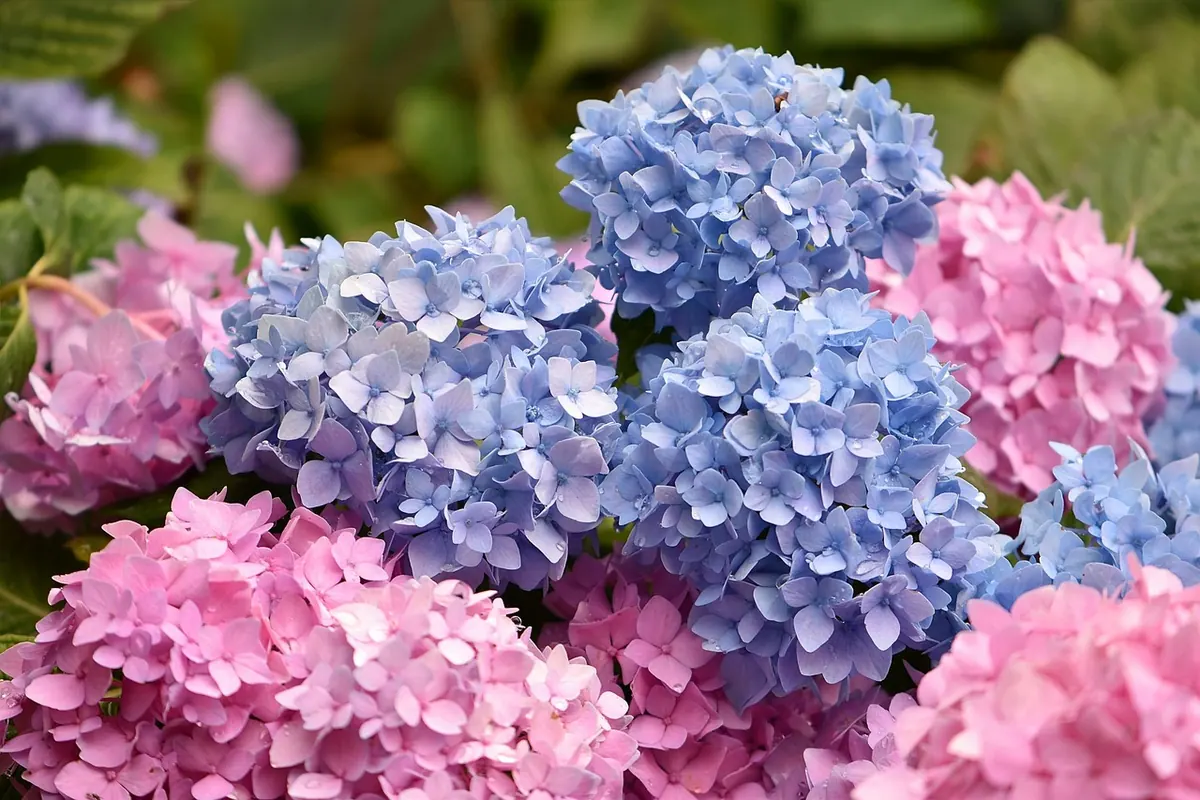
You planted a blue mophead by the front gate. It came up pink. Or the reverse: a shrub that has been reliably pink for a decade has started throwing blue-tinged heads. The plant is not being difficult. It is telling you exactly what your soil is made of, and once you can read that message you can shift the colour either way — slowly, and without harming the shrub.
How soil pH decides the colour
Hydrangea sepals — the papery, showy parts we call petals — take their colour from pigments called anthocyanins, and those pigments respond to aluminium. In an acid soil, aluminium dissolves and the roots take it up. It travels to the flowers and turns the pigment blue. In a neutral or alkaline soil, the same aluminium is bound up in compounds the roots cannot reach, so the plant produces pink flowers instead.
The turning point sits roughly around pH 6. Blue is most reliable below pH 5.5. Above pH 6.5 you get pink. In the middle you get the muddled purples and blue-pinks that many gardeners end up with, sometimes on the same plant, sometimes on a single head.
Two practical points follow. First, the colour in front of you was decided months ago, when the flower buds formed. Changing the soil this week affects next year's flowers, not these. Second, the shift is slow, because it is the soil chemistry you are altering, not the plant.
Which hydrangeas actually change colour
The colour-shifters are Hydrangea macrophylla — the mopheads and lacecaps sold in every garden centre — and its close relative H. serrata. If you have one of those, pH is your lever.
Others ignore it. Hydrangea paniculata (the cone-shaped ones, such as 'Limelight'), H. arborescens ('Annabelle' and its relatives) and H. quercifolia, the oak-leaved hydrangea, produce white, cream or pale green flowers and stay that way whatever you do to the soil. White mopheads stay white too: they carry no pigment for aluminium to act on.
Test before you tinker
A simple pH test kit costs very little and takes ten minutes. Take samples from a few spots, about 10–15cm down, mix them, and test the mix. Sample more than one area if your garden varies — a border against a wall is often very different from the middle of a lawn.
Clues in the planting can help too:
- Rhododendrons, camellias, pieris and blueberries thriving: acid soil.
- Good brassicas, plenty of bindweed or clover: often alkaline.
- Chalky subsoil, lime mortar on old walls, concrete footings: these leach lime and push pH up over time.
- Hard tap water: watering alone will slowly make pots and borders more alkaline.
Making the flowers blue
Blue needs acid soil, and in much of Britain that means actively acidifying it.
- Use sulphur. Sold as a soil acidifier, it is worked into the top few centimetres at the rate on the packet. Soil bacteria convert it to acid over several months, so apply in spring or early autumn and expect the results next season.
- Add aluminium sulphate, carefully. This acidifies and supplies the aluminium the flowers need, but it is easy to overdo. Follow the label, dissolve it thoroughly before applying, keep it off the leaves, and never use it on a dry, stressed plant.
- Mulch with ericaceous compost or pine bark, and top-dress pots with fresh ericaceous compost each spring.
- Water with rainwater where you can. It is slightly acid and free of the lime in tap water.
Pots are far easier than borders. Replace the top few centimetres of compost with ericaceous compost and the plant will usually shift within a season or two.
Making the flowers pink
Pink is the default in alkaline conditions, so the job here is raising pH. Garden lime — ground limestone or dolomite — is the usual choice. Follow the packet rate, work it in lightly around the drip line, then water it in. Autumn or early spring are the best times.
Wood ash from a real fire, in small amounts, also raises pH and adds potassium, though its strength varies and it is easy to over-apply. Chalk or crushed limestone dug into the surrounding soil works too, just more slowly than you would like.
If you garden on naturally chalky or heavy clay soil, pink hydrangeas are the sensible choice. Fighting geology with sulphur is a job without an end, and the soil usually wins.
Do it gradually
Big, sudden swings in pH do more harm than a slightly wrong flower colour. Roots, soil life and the availability of other nutrients — iron, manganese, magnesium, calcium — all depend on a stable pH, and over-acidified soil can lock up nutrients the plant needs.
A few rules worth keeping:
- Move pH by no more than about half a point a year, and test again before the next application.
- Never apply lime and sulphur in the same season; they cancel each other out.
- Keep products off leaves and store them sealed, dry and out of reach of children and pets.
- Give the plant a full year. Established shrubs often produce mixed, transitional colour first.
Keeping it steady
Work out your starting pH, decide which colour you want, then choose the mildest route to it. For blue: ericaceous compost, rainwater, sulphur only if the soil is stubborn, plus patience. For pink: a light dressing of garden lime in spring and a willingness to accept what your soil does well. For white and paniculate hydrangeas: nothing at all beyond sun, water and a spring tidy-up.
Write the date of any treatment on a plant label pushed in beside the shrub, and test again in a year. Colour is a slow negotiation with your soil, not a switch. Once you have the balance, though, hydrangeas tend to hold it for years — and a row of blue mopheads against a wall is worth the wait.
Photo: HelgaKa / Pixabay