
A Beginner's Guide to Growing Tomatoes in a UK Greenhouse
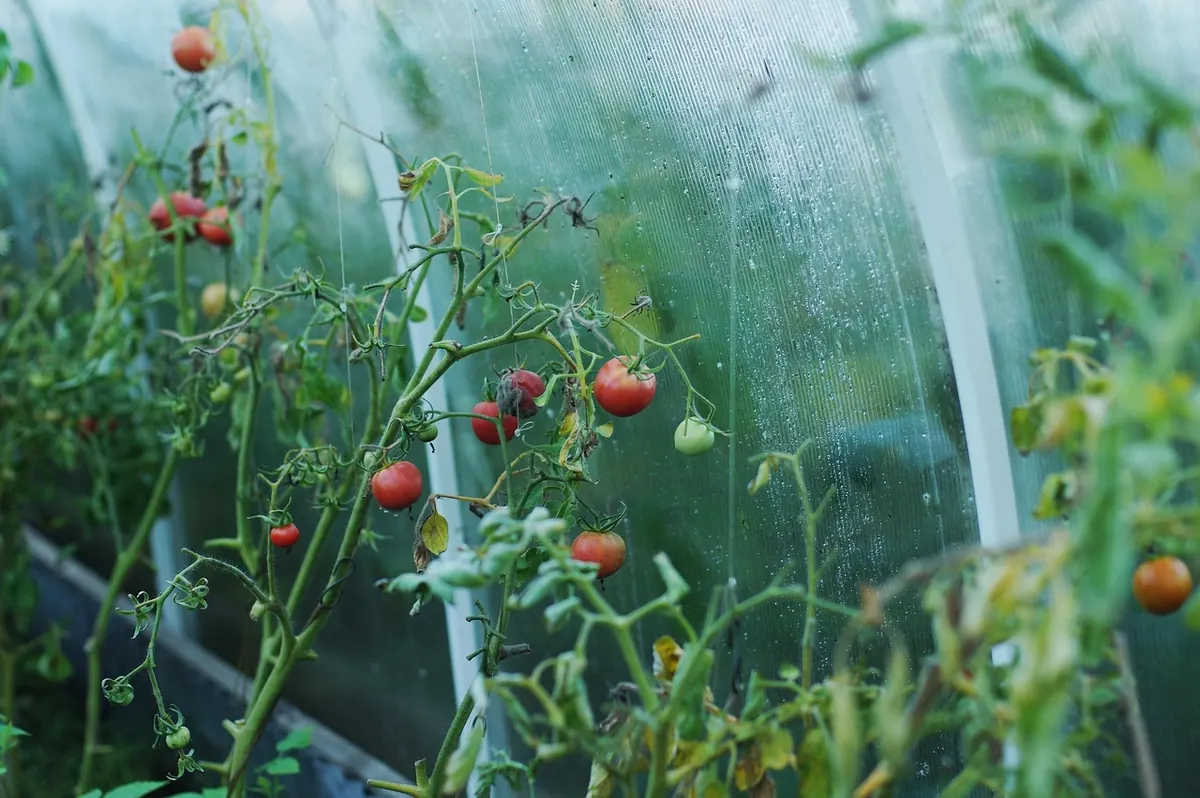
A greenhouse gives you something the British summer rarely guarantees: a long stretch of warm, still, dry air. That is exactly what tomatoes want. Get a few basics right — the right variety, a sensible sowing date, steady watering and a little weekly attention — and you can be picking ripe fruit from July until the first frosts, and sometimes well into October.
Cordon or bush? Choose your growing habit first
Tomatoes come in two habits, and the choice shapes everything else you do with them.
Cordon varieties, also called indeterminate, grow as a single tall stem. You tie them to a cane or string, remove the side shoots that appear in the leaf joints, and stop the plant once it has set as many trusses as you want. They crop over a long season and give the heaviest yields under glass, which is why most beefsteak and cherry types are cordons.
Bush varieties, or determinate, grow to a set height and then stop on their own, spreading into a compact, self-supporting plant. They need no side-shooting, suit pots and grow bags, and often ripen their crop earlier in one concentrated flush. If you want tomatoes with the least possible fuss, start here.
Seed packets usually say "indeterminate" or "cordon" for the tall ones, and "determinate", "bush" or "compact" for the others. A few reliable starting points:
- 'Gardener's Delight' — a cordon cherry with small, sweet fruit and a long cropping season.
- 'Alicante' — a classic cordon with medium, well-flavoured fruit.
- 'Shirley' — a traditional greenhouse cordon that copes with cooler spells.
- 'Sungold' — an orange cordon cherry; thin-skinned and very sweet, so pick promptly.
- 'Tumbling Tom' — a trailing bush type that works well in a pot or hanging basket.
- 'Roma' — a plum-shaped bush or semi-bush, good for sauces and roasting.
Timing your sowings for a British summer
For a main greenhouse crop, sow indoors from late February to mid-March. Sow earlier and the seedlings will stretch for light on a dull windowsill, giving you weak, leggy plants that never quite catch up. Sow 1.5cm deep in moist seed compost in modules or small pots, keep them at around 18–21°C, and expect germination within a week or so.
The moment the seedlings appear, move them somewhere bright and slightly cooler, roughly 15–18°C. Pot them on individually when the first true leaves open, sinking the stem slightly deeper than it was. A second sowing in late April or May gives you fresh plants for late-summer and autumn fruit, once the first batch is tiring. If you garden in northern Scotland or on an exposed coast, push every date back a fortnight and lean on a heated propagator.
Planting out and supporting
Don't move plants into an unheated greenhouse until night temperatures stay above about 10°C and the risk of frost has passed — usually late April in the south, May or early June further north. Bubble wrap the greenhouse in early spring and remove it once the weather settles. Harden plants off over a week by leaving them in the greenhouse by day and bringing them in at night.
Tomatoes grow well in grow bags, in pots of at least 10 litres per plant, or in a greenhouse border improved with plenty of compost. If you use the same border soil year after year, rotate your crops, because soil-borne problems build up quickly. Plant deeply, burying the stem up to the first pair of leaves: roots will form along the buried section and give you a stronger plant. Space them about 45cm apart.
Every plant needs support. A cane pushed in beside it works, but a horizontal wire near the roof with a length of string dropping to each plant is tidier. Wind the string loosely around the stem as it grows, always in the same direction, so it never cuts in.
Watering and feeding without guesswork
Consistency matters more than quantity. Check the top few centimetres of compost and water when it feels dry, aiming for moist rather than soaked. In a hot July a plant in a grow bag may need water twice a day. Water into the compost, not over the leaves, and never let plants swing between drought and flood.
Start feeding when the first truss has set fruit about the size of a marble. Use a high-potash tomato feed once a week, following the dilution on the label, and increase to twice weekly when the plants are carrying a heavy crop. Too much nitrogen-rich feed gives you a forest of leaves and very little fruit.
Dark, sunken patches on the base of the fruit are blossom end rot, which almost always comes from irregular watering rather than a lack of anything in the compost. Mulching the surface helps. If older leaves yellow between the veins while the edges stay green, a foliar feed of Epsom salts is a common remedy for magnesium shortage.
Side-shooting, pollination and ventilation
On cordons, look each week for the small shoot growing in the angle between a leaf and the main stem and snap it out with your thumb and finger while it is still soft. Take care not to remove flower trusses by mistake — those grow directly from the stem and carry buds. Once a cordon has set four or five trusses, around late July or early August, pinch out the growing tip two leaves above the top truss so the plant puts its energy into ripening what it has.
Tomatoes pollinate themselves, but they need a nudge. Tap the cane or the support wire sharply in mid-morning, when the greenhouse is warming up, or brush each open flower with a soft artist's brush. Leave vents open on warm days: humidity and temperatures above roughly 30°C both cause flowers to drop without setting fruit. In July, shade the glass with netting or horticultural shading to take the edge off the midday sun.
Ripening through to the first frosts
As the lower trusses colour, remove the leaves beneath them a few at a time. This lets light and air reach the fruit and reduces the chances of disease. Pick tomatoes when they are fully coloured; those ripened on the plant taste best, though a fruit finished on a sunny windowsill is still better than anything from a supermarket.
When the forecast turns cold, usually in October, clear the plants. Any remaining green fruit will ripen in a paper bag or a drawer with a ripe banana, and the rest make excellent chutney — cook green tomatoes rather than eating them raw. Afterwards, wash down the glass, sweep out plant debris and scrub your pots before storing them, so you start next season clean.
A ten-minute weekly check
- Tie in new growth and check that string or canes are not rubbing the stems.
- Snap out side shoots on cordon varieties.
- Feel the compost before you water, and water if it is dry.
- Feed if the first truss has set fruit.
- Tap the supports mid-morning to help flowers set.
- Check the undersides of leaves for whitefly, aphids and red spider mite, and remove any yellowing lower leaves.
Do that once a week and the plants will handle the rest. Keep a few notes as you go — which varieties ripened first, which split, which tasted best in a salad — and next year's sowing will be better than this one.
Photo: nonstopsmile / Pixabay